When Yosemite Waterfalls Are at Their Best
Timing your visit around snowmelt plays a bigger role than most visitors anticipate. Yosemite's waterfalls are fed primarily by Sierra Nevada snowpack, which means the best time to see them at their peak is spring-roughly April through June.
Early April is usually still flooding the falls with high, cold water. Many trails remain icy or muddy, and this is a popular time of year for visitors. Peak runoff varies from mid-April into late May, depending in large part on winter snowpack. Heavy snow years can push the tail end to June, and many smaller falls slow to a trickle or stop altogether by July.
Autumn is quieter. Bridalveil Fall here keeps some water flow year-round; most others turn off by September.
Snowfall differences are directly affecting yearly changes in water flow; hence, it might be a good idea to check the NPS park alerts page prior to heading to Yosemite. A quick check might just save heartache.
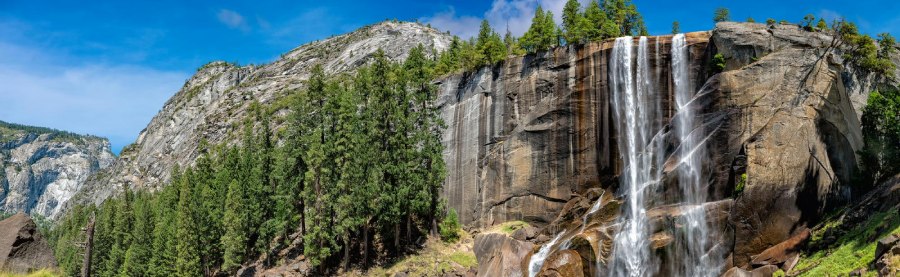
The Best Waterfalls to See and How to View Them
The main reason why some tourists come to Yosemite is to catch a glimpse of its spectacular waterfalls, especially during spring when the snow melts and rivers gain their full force. Depending on the seasons, the volume, sound, and scale could be very diverse and, therefore, familiarity with when and how to approach each one makes a huge difference - rest they may not disappoint tourists.
Yosemite Falls
At 2,425 feet, this is one of the tallest waterfalls in North America. A short paved walk from the valley floor gives you a close-up view, or you can hike to the top for a genuinely jaw-dropping perspective. Spring snowmelt turns it into a roaring curtain of white water.
Bridalveil Fall
Easily the most accessible waterfall in the park. A quarter-mile walk from the parking area brings you right to the base. In spring, the flow is heavy enough that you'll get misted standing nearby.
Vernal Fall
Reached via the Mist Trail, this 317-foot drop earns its name in spring. Expect to get soaked on the trail. Worth every wet step.
Nevada Fall
Continue past Vernal Fall for another mile and you reach this 594-foot cascade. The hike is more demanding, but the payoff is a powerful, wide curtain of water with sweeping valley views.
Seasonal Roadside Cascades
During peak runoff, smaller unnamed falls appear along Tioga Road and Valley Drive. Easy to spot from your car window, these short-lived flows are a genuine spring bonus.
Spring Is When Yosemite Feels Most Alive
Check the conditions before you determine your day, as flood timing can change with each year, meaning about might be quite large in late April in one year but completely falling off by mid-May of the following year. However, in general terms, the time stretching from late April to early June would be the best time through which waterfalls will be roaring in the park. If you can make only one trip, go there. Start with the easy and touristy views - Yosemite Falls and Bridalveil Fall require small or no trail work and are indeed magnificent during high water. Base your decision on your capacity and how much time you have. A few trails tend to become slippery and crowded in minutes, so reading the guides and going through a little planning helps. The most sensational encounter occurs between April and June, but a well-timed visit according to fitness level could be unforgettable as well.